
The Brain’s Gatekeeper: How Neural Thresholds Shape What We Notice
All-or-None Signal Yields the Almost Gate

In every moment we experience, our brains make quick-fire decisions that often rest on a subtle, yet powerful mechanism: the Almost Gate.
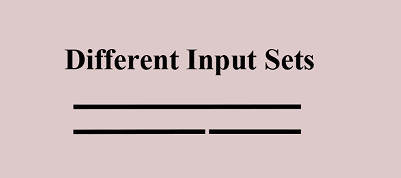
Imagine two lines drawn on a page (as in figure above)—nearly identical, save for a tiny break—and yet our minds treat them as one continuous form. In a similar fashion, when inputs are close enough in appearance or sensation—even if not identical—the brain’s neural threshold tells us to treat them the same.
This “almost match” mechanism is at the heart of what we call the Almost Gate, where neurons blur the differences between similar stimuli, smoothing out our perception of the world. By setting a threshold that differentiates what is distinct from what is merely a variation, the neural processing ensures that minor differences vanish into a uniform signal.
As a result, the information we process, from sensory input to memory integration, flows into broader categories and intuitive responses. What might seem like an impeccable focus on minutiae is, in reality, a highly efficient system designed to sift through endless data—often before it even reaches our conscious awareness.
Neural Thresholds Shape Thinking Styles
At the core of the Almost Gate lies the neural threshold—a dynamic point at which neurons decide whether an input is “close enough” to what they expect to see or feel. Think of it as a built-in tolerance: if two inputs are nearly identical, they trigger the same response in downstream processing.
This mechanism is not merely a quirk of design; it underpins how our brains filter and integrate sensory information. Even our genetic makeup may predetermine the precise height of this threshold.
Some individuals, perhaps those with a high threshold, require nearly flawless, high-fidelity signals to differentiate inputs, while creative types with a lower threshold might see similarities in just about everything.
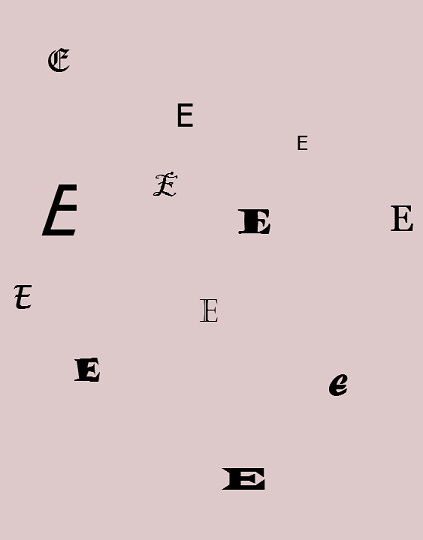
Consider the simple act of reading. Encountering the letter 'E' in various fonts or scripts (as in the above image) is a routine yet revealing example. A cursive 'E' may look distinct from a block-letter 'E,' but most of us recognize them as the same. This demonstrates how our brains extract common features while filtering out certain details—an efficient and necessary process for rapid cognition. However, the Almost Gate can be a double-edged sword. By smoothing over subtle distinctions, it may sometimes obscure important differences, leading to potential oversights.
Beyond simple letter recognition, the Almost Gate plays a role in influencing our emotions and decision-making. Much of what we see, learn, and even feel passes through the neural mechanism that naturally refines what we take in—yet emotions, processed within the limbic system, undergo coarser categorization due to fewer neural layers compared to the cortex, leading to a more immediate and generalized response. For example, when we face a situation that requires immediate action, the brain’s executive prefrontal areas come into play, yet the preliminary input has already been smoothed out by countless Almost Gates along the way.
Individual differences in neural thresholds may influence broader cognitive styles—a possibility reflected in everyday interactions. Some people seem naturally inclined toward pattern recognition and creative thinking, spotting connections others might overlook. In contrast, those with a higher threshold may exhibit a stronger preference for precision, order, and structure. This contrast suggests that our neural architecture, shaped by both genetics and experience, plays a quiet yet fundamental role in shaping how we process the world.
Moreover, as signals cascade through interconnected layers of neurons, each layer enforces its collective version of the Almost Gate. This means that even as our brains build complex perceptions and memories, the initial ‘smoothing’ choices can have ripple effects on cognition and behavior. Understanding this can enhance our awareness of how we sometimes process information without our conscious mind’s full engagement.
Thus, the Almost Gate is not only a neural phenomenon but a bridge between the raw data of our senses and the refined, though sometimes oversimplified, perceptions that guide our actions. As you reflect on your cognitive processes, consider how this mechanism might be at work in your daily experiences, subtly shaping your world.
The Everyday Almost Gate
Our internal Almost Gate isn’t just a fascinating neural peculiarity—it has real-world consequences. Start by considering how your emotions shape what you notice and how you interpret situations. When confronted with high-stress situations or deep personal experiences, your brain might lean on the Almost Gate to process information quickly, sometimes at the expense of key details. This can explain why, in the heat of the moment, you might overlook nuances that would otherwise alter your decision-making.
Think about a scenario from daily life: when buying an expensive item, you might rationalize your decision by focusing on the product’s most salient features and ignoring minor discrepancies or potential red flags. In such moments, the Almost Gate can be both a boon (by simplifying a complex decision) and a risk (by filtering out details that demand scrutiny). Recognizing this pattern can empower you to pause and re-evaluate—asking, “Am I overlooking something important?”
Moreover, understanding that our neural threshold can vary from person to person introduces a new lens for self-reflection. Perhaps you tend to notice subtle differences more than others. Recognizing this can help you refine your approach to both creative thinking and practical decision-making. It encourages you to seek balance between the efficient use of mental shortcuts and the need for thorough analysis.
Challenge yourself to catch moments when your brain smooths over important distinctions—whether in relationships, work, or personal choices. Taking a moment to critically assess what might have been “smoothed over” can lead to deeper insights and more deliberate actions.
Navigating Thought: The Gate Opens
To sum up, while it might seem that all inputs are treated equally by our brains, the reality is more nuanced. The Almost Gate demonstrates that sometimes, even seemingly unequal pieces of information are processed as the same. This initial focus on individual neurons lays the groundwork for how layers of neurons ultimately shape our understanding of sensory input, memories, and emotions.
Keep in mind that though our neural filters streamline cognition, they can also blur essential details. As you engage in critical thinking and introspection, ask yourself: When have you felt your emotions override precise analysis? I welcome your reflections and stories on times when your feelings claimed precedence over your conscious thoughts. Share your thoughts, start a discussion, and let’s further explore how the invisible mechanics of the brain shape our reality.
For those interested in a deeper dive into how neural cognition is framed from a psychiatric perspective, Manfred Spitzer’s The Mind within the Net offers compelling insights into how networks of neurons shape thought and perception.
And remember—there’s much more to uncover. Did you know that 99.9% of all brain neurons connect only to other neurons, never directly interacting with sensory input or motor output? That means just 0.1% engage with the outside world, while the rest shape, filter, and interpret that tiny sliver of reality. This staggering imbalance underscores the gulf between the world we inhabit and the internal reality we construct.